
MBTI
ESFJ function stack
The ESFJ stack is often described as Fe, Si, Ne, and Ti. Here is how group care, concrete memory, worry or novelty, and private logic interact.
What this is
For people who recognize ESFJ, the Provider, attention often starts with what the group needs in order to stay connected, remembers the concrete ways that has been done, flinches at unfamiliar social risk, and treats detached analysis as the least natural move.
Warmth plus follow-through builds places people want to be. Ti is what keeps those places honest.
The four functions
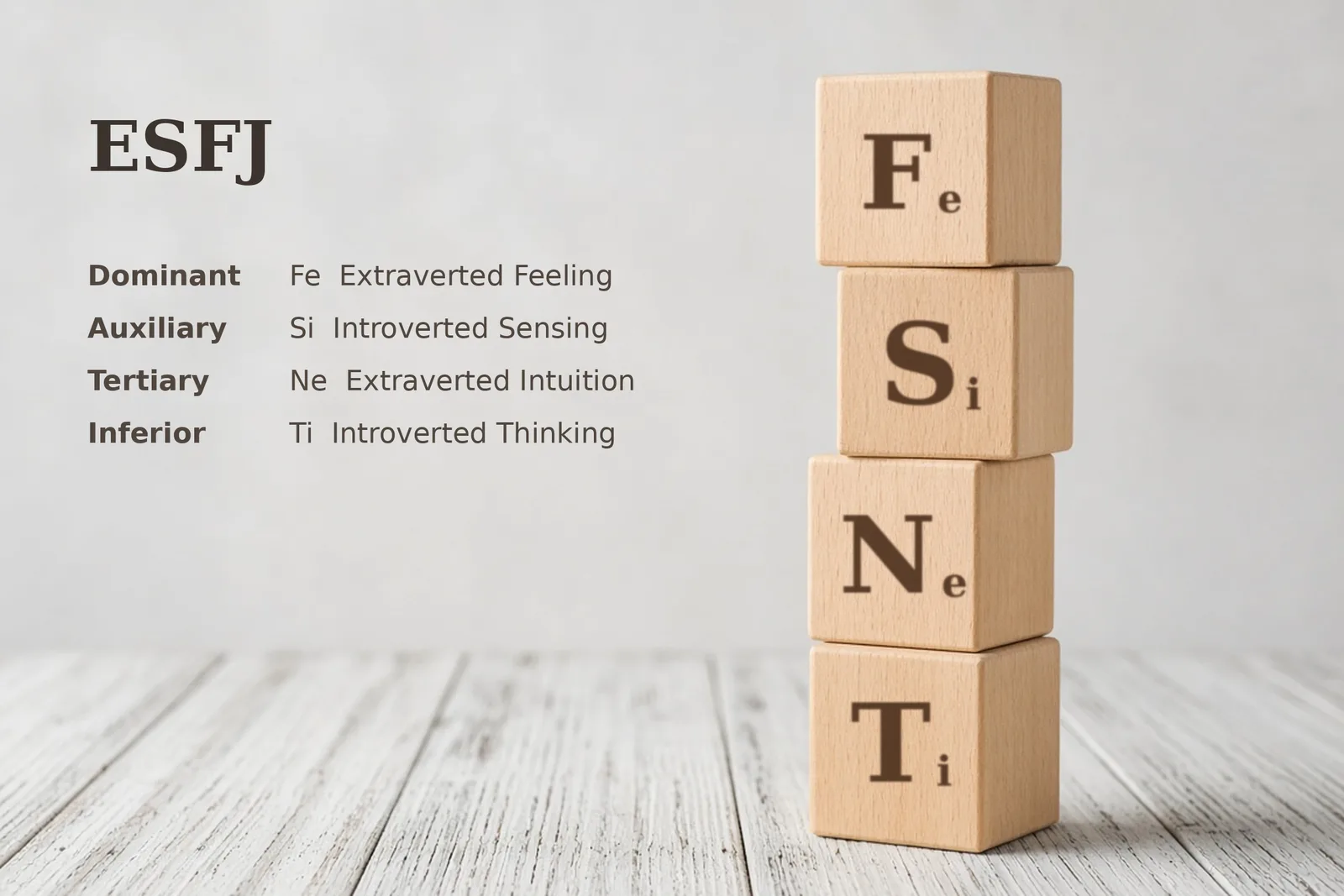
Extraverted Feeling (Fe) in the lead tracks morale, inclusion, and the practical comfort of the people present. Disapproval can feel like danger.
Introverted Sensing (Si) as the second function remembers the rituals, preferences, and methods that have cared for people before. It makes the care specific.
Extraverted Intuition (Ne) in the third position can imagine other ways of gathering, and it can also spin social what-ifs: who might be hurt, left out, or disappointed.
Introverted Thinking (Ti) in the fourth position wants a reason that does not depend on who is pleased. Under strain it may be skipped, or it may arrive as a sudden, sharp critique of someone's inconsistency.
Strengths
Fe and Si create hospitality with a memory. People feel specifically tended, not generically processed. Ne can refresh a tradition before it goes stale. Ti, used early, helps you choose whom you are serving so the care has an edge.
Blind spots
Fe may say yes to keep the peace. Si may defend the social habit past its usefulness. Ne inflates the cost of a no. Ti then explodes after a long accommodation, and everyone is surprised, including you.
At work and while building
Define the people the work is for. Let Ti name a tradeoff Fe would rather blur. Use Si to deliver concrete care to that chosen group, and Ne to try one new form of it. A service that tries to comfort every stakeholder becomes vague, then exhausting.
In relationships
Showing up is love, and a hidden no is not kindness. State a preference that is yours. In conflict, stay through the awkward minute instead of repairing the mood immediately. A warm gesture can follow the truth. It should not replace it.
Personal growth
Separate kindness from self-erasure. Ti's question is a friend: is this care working, or is it keeping me needed? You can be a provider with a limit.
Ways to practice
- Decline one request in a single sentence, with no substitute offer.
- Ask what care is actually wanted. Stop one habit nobody requested.
- Put a personal preference into a shared plan and leave it there.
- If you feel unseen, ask for the appreciation instead of doubling the labor.