
MBTI
ESTJ function stack
The ESTJ stack is often described as Te, Si, Ne, and Fi. Here is how structure, experience, alternatives, and personal fairness interact.
What this is
For people who recognize ESTJ, the Executive, attention often organizes the shared world first, draws on experience about what has held, glances at alternatives, and consults a personal sense of fairness later than the urge to get it done.
A clear standard helps a team. A standard that cannot hear Fi or a new fact becomes a wall with a schedule attached.
The four functions
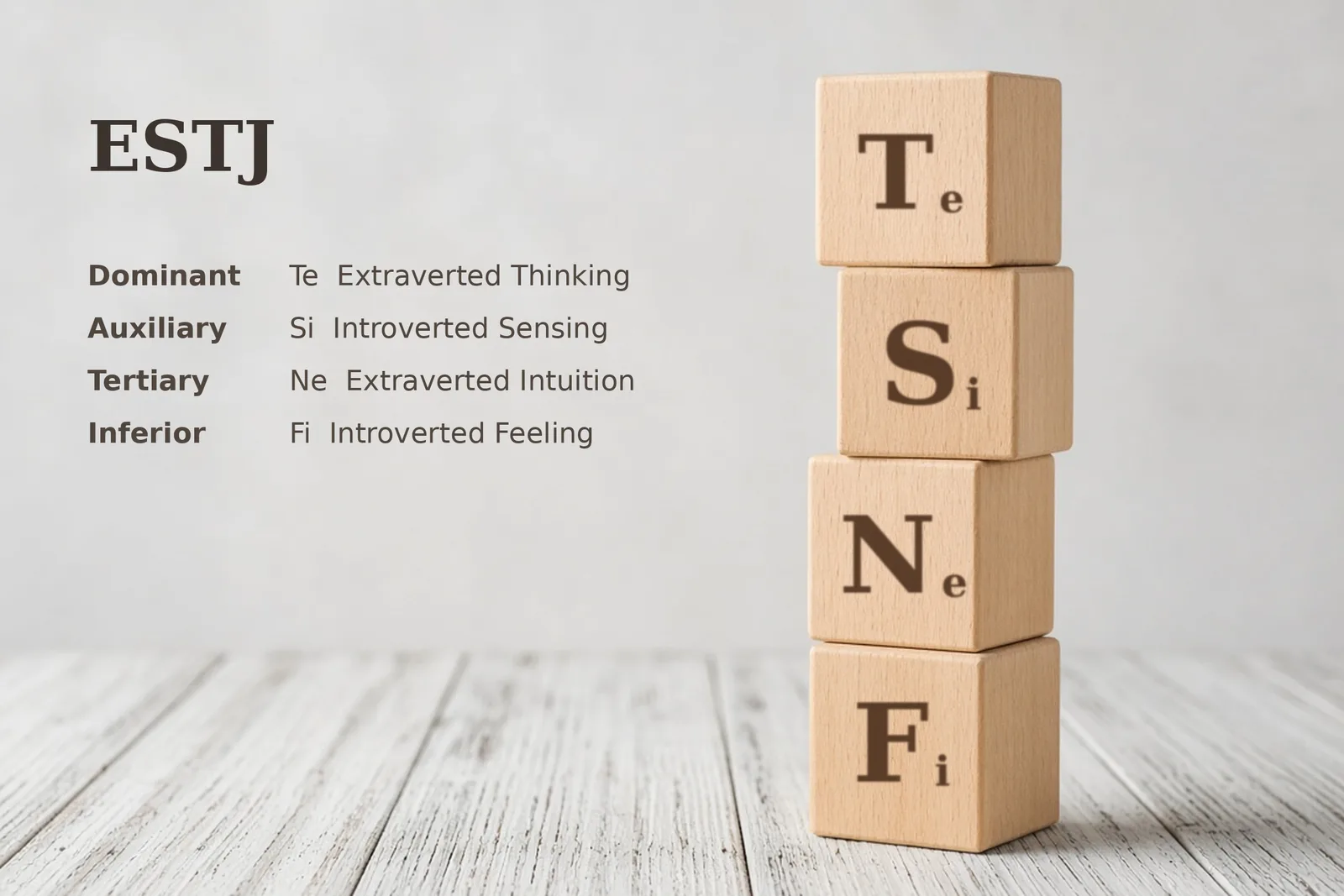
Extraverted Thinking (Te) in the lead wants owners, measures, and closure. It is impatient with talk that does not change the work.
Introverted Sensing (Si) as the second function supplies the precedent: which structures survived, which corners cost us later. It steadies Te and can also freeze it.
Extraverted Intuition (Ne) in the third position can see another approach. It is available, and it is easy to skip when the proven path is already in motion.
Introverted Feeling (Fi) in the fourth position cares about fairness to the particular person, including you. Under strain it can erupt as personal offense after a long stretch of impersonal enforcement.
Strengths
Te and Si make implementation reliable. Ne, given a hearing, keeps the playbook from becoming superstition. Fi, consulted before the rule hardens, makes the rule something people can respect rather than only obey. That is executive skill, not softness.
Blind spots
Te plus Si can confuse tenure with truth. Ne ideas from newer people get ranked as inexperience. Fi, unheard, turns a process disagreement into a character judgment. Rest gets classified as a lack of discipline.
At work and while building
Publish the Te goal and the Si lesson behind it. Ask for one Ne alternative with an end date. Add a Fi line: who is this hard on, and is that hardness serving the purpose? Let people apply the rule with judgment. Otherwise you become the only interpreter of your own system.
In relationships
Provision and follow-through are real care. Fi still needs words. In conflict, do not assign the repair steps before you have heard what fairness means to them. Being influenced is part of being trustworthy, not a loss of rank.
Personal growth
Let Fi and Ne into the decision while you still feel in control. Updating a rule in public is a stronger kind of authority than defending a rule that the facts have left behind.
Ways to practice
- Start a correction with the purpose of the rule and one thing worth keeping.
- Run one experiment outside the playbook. Honor the review.
- Say something you feel that is not a task and not a complaint.
- Ask a newer colleague which rule is slowing them down. Change or explain it.