
MBTI
INTJ function stack
The INTJ stack is often described as Ni, Te, Fi, and Se. Here is how those four roles tend to cooperate, stall, and grow.
What this is
A function stack is a working sketch of attention, not a ranking of your worth. For people who recognize INTJ, the Architect, the sketch usually runs from a private converging picture, to an external plan, to a quiet personal standard, and only then to the live sensory world.
The first function is the most trusted. The second makes that trust usable with other people. The third is available but easier to skip. The fourth is the least rehearsed, so it tends to show up late, clumsily, or in a burst when you are depleted. None of this is a rule you must obey.
The four functions
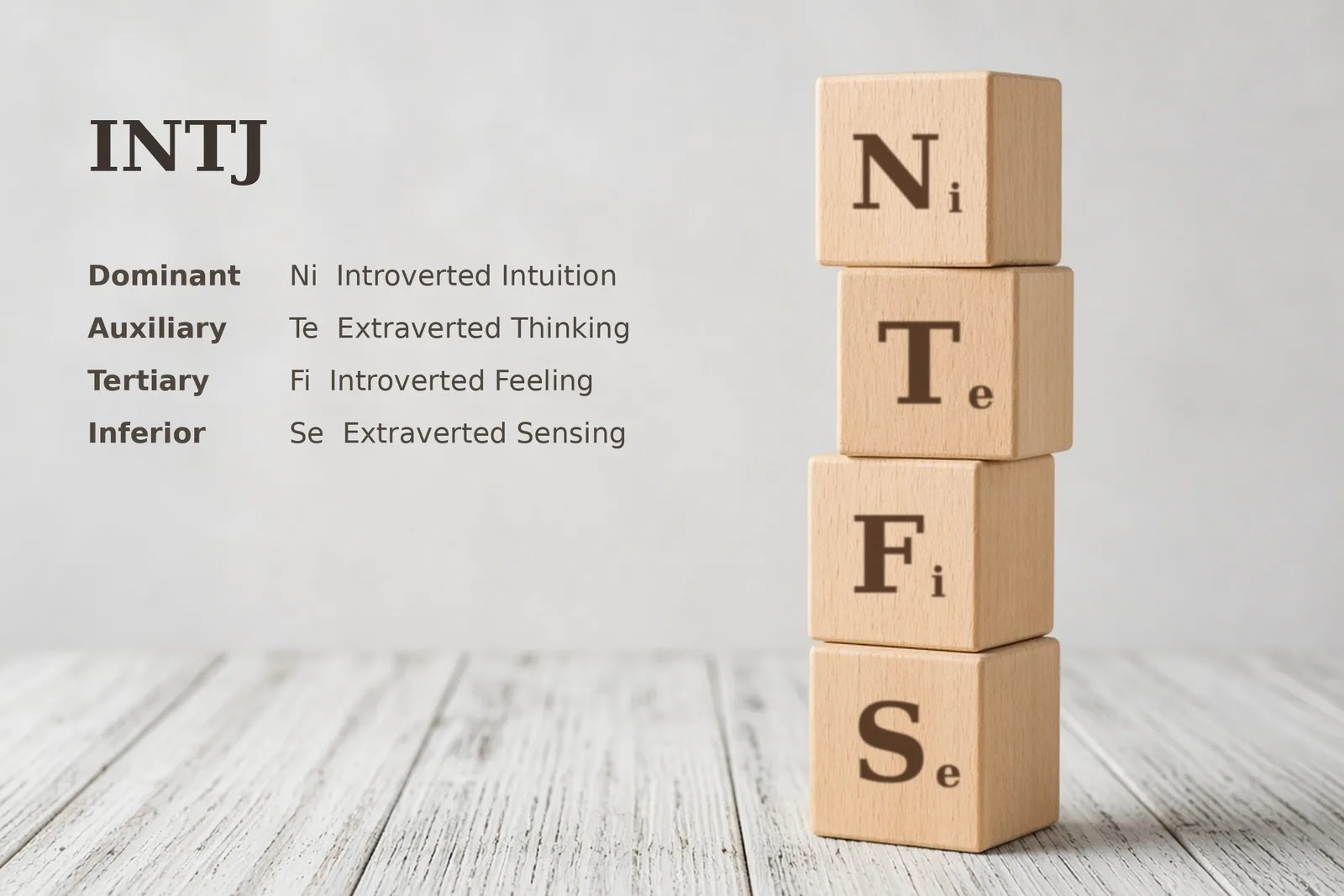
Introverted Intuition (Ni) in the lead looks for the pattern that will still matter after the noise drops. It wants one picture, not a pile of equally interesting options. That picture can arrive before you can justify it.
Extraverted Thinking (Te) as the second function takes the picture into public structure: a sequence, a metric, a role, a memo. This is how the inner aim becomes a build other people can join or challenge.
Introverted Feeling (Fi) in the third position holds a private line about what is worth it. It may stay silent while Te is busy, then object once a plan is already efficient and somehow hollow.
Extraverted Sensing (Se) in the fourth position is the body, the room, the prototype in the hand, and the fact that will not wait for the model. Under strain it can swing from neglect to a sudden overfocus on comfort, appearance, or a physical detail.
Strengths
When Ni and Te work together, a long aim becomes a sequence instead of a mood. Teams get a direction and a way to inspect it. Fi, consulted early, keeps the direction from being clever and empty. Se, invited on purpose, keeps the direction from being clever and unusable.
Blind spots
Ni can close the picture too soon, and Te will then execute the wrong certainty with impressive discipline. Fi that only speaks as resentment surprises people who thought the standard was only logistical. Se, ignored for months, returns as exhaustion, a sloppy launch, or a craving that does not match the stated plan.
At work and while building
Use the stack on a build by writing the Ni hypothesis, the Te test, and the date you will look at reality. Put a sensory or user checkpoint on the calendar before the model feels finished. Ask the Fi question in week one: if this ships, will I respect it?
In relationships
Partners often meet Te first and Fi much later. Say the personal standard while it is still a preference, not a verdict. When you disappear into Ni, give a return time so the silence is not the only message. Shared physical life, a walk, a meal, a room you actually inhabit, is not a distraction from the bond. It is one of the places the bond becomes real.
Personal growth
Growth is letting Se and Fi revise Ni before Te pours concrete. Treat the inner picture as a draft with authors besides yourself: the user, the body, the person who has to live with the plan.
Ways to practice
- Write the one-sentence future you are building toward, then one fact from this week that supports it and one that does not.
- Before the next hard decision, ask what you personally will not trade. Say that sentence to someone involved.
- Schedule a contact with the actual object: the interface, the space, the material. Change one thing you notice.
- If you feel suddenly obsessed with a comfort or a purchase, check whether the basic plan has been ignoring your body for too long.