
MBTI
ISTJ function stack
The ISTJ stack is often described as Si, Te, Fi, and Ne. Here is how memory, structure, private loyalty, and new possibilities interact.
What this is
For people who recognize ISTJ, the Inspector, attention often starts with a careful inner record, organizes duties from that record, holds a quiet personal loyalty, and treats untested possibilities as the least comfortable part of the work.
The archive is a strength when it is allowed to be updated. It becomes a ceiling when every new fact has to sound like the old one before it counts.
The four functions
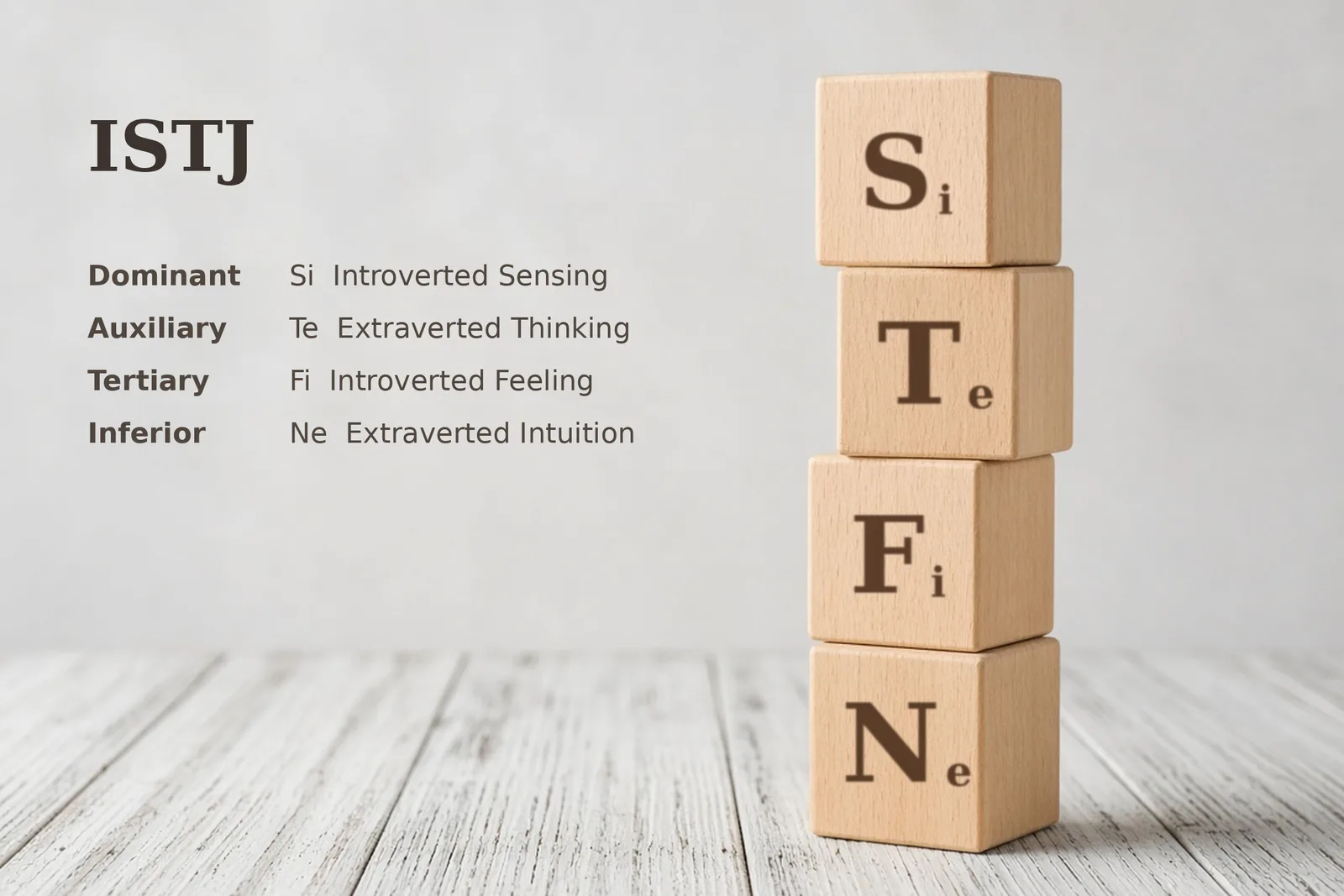
Introverted Sensing (Si) in the lead compares now with a detailed memory of what happened, what worked, and what it cost. Continuity feels like integrity.
Extraverted Thinking (Te) as the second function turns that memory into procedures, checklists, and measurable follow-through other people can rely on.
Introverted Feeling (Fi) in the third position is a private sense of fairness and duty. It often shows up as keeping your word rather than as a speech about values.
Extraverted Intuition (Ne) in the fourth position imagines alternate futures and unintended consequences. Under strain it can be dismissed, or it can flood in as a stack of worst cases.
Strengths
Si and Te together make work that still functions after the kickoff. Fi keeps the standard from being only bureaucratic: there is usually a person or a promise underneath. Ne, given a small sanctioned experiment, helps the archive learn instead of only defend.
Blind spots
Si can file a new method as carelessness. Te then enforces the old method with extra rigor. Fi, unspoken, makes the enforcement feel colder than the loyalty behind it. Ne, ignored until a shock, produces anxiety rather than useful options.
At work and while building
Use Si to name what the record actually shows, Te to define done, and a bounded Ne question: what would we try if the old path is failing this specific user? Say the Fi reason for the rule. A standard people understand is stronger than a standard they only fear.
In relationships
Reliability is the visible Te. The Fi underneath needs a sentence or it will be mistaken for mere habit. When a partner wants change, separate the routines that protect the bond from the routines that only protect you from novelty. Ne is not a threat to loyalty. It is a way loyalty stays accurate.
Personal growth
Update the archive on purpose. Keep the promises. Retire the rules that no longer serve the people you are loyal to, including yourself.
Ways to practice
- Pick one defended procedure and write the evidence that would justify a change.
- Explain the personal reason for a standard before you enforce it.
- Run one low-stakes experiment with a review date. Record the result in the same archive as the old method.
- Tell someone the regard behind a practical thing you did for them.